
In-Person vs Online PT Courses: Why Gym-Based Training Wins
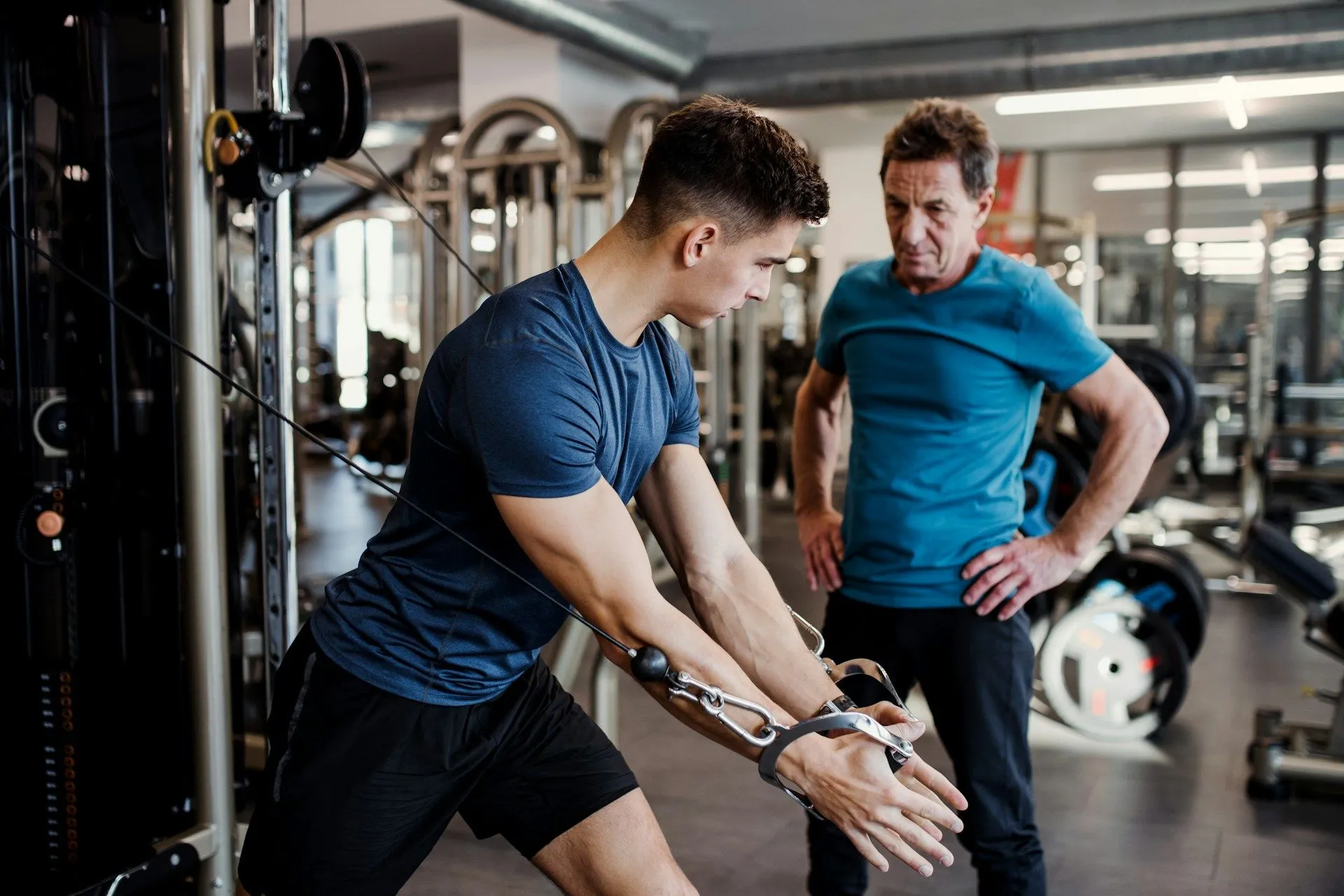
Personal training is one of the most physical, people-facing careers you can choose. You'll spend your days demonstrating exercises, correcting form, adapting movements on the fly, and reading the body language of someone who's struggling but won't tell you. It's a profession built on presence.
So why are so many personal trainer courses now delivered entirely through a screen?
The shift towards online-only PT qualifications has accelerated in recent years. While remote learning has its place (particularly for theory modules), there's a fundamental disconnect between studying anatomy on a laptop and actually coaching a real person through a deadlift.
If you're considering a career in personal training, the format of your course matters far more than most people realise. Here's why hands-on, gym-based training produces more confident, more capable personal trainers, and why it should be non-negotiable when choosing your qualification.
The Problem with Online-Only PT Courses
Let's be clear: online learning isn't inherently bad. It's excellent for studying anatomy, physiology, nutrition theory, and programme design principles. These are knowledge-based subjects that lend themselves well to self-paced study.
The problem arises when the entire qualification (including the practical, coaching-focused elements) is delivered remotely. Personal training is a skill-based profession. You need to develop:
Exercise demonstration ability - showing clients exactly how a movement should look and feel
Form correction skills - spotting subtle errors in real time and knowing how to cue adjustments
Hands-on spotting techniques - physically supporting clients during challenging lifts
Communication under pressure - coaching someone through fatigue, frustration, or anxiety
Equipment familiarity - confidently navigating a fully equipped gym floor
Spatial awareness - managing sessions in a busy environment alongside other gym users
None of these skills can be meaningfully developed through a video call. You can watch someone squat on screen, but you can't walk around them, assess their movement from multiple angles, or feel the compensations happening in their body. The gap between understanding a concept and applying it with a real person in front of you is enormous.
The 'Conference Room Workshop' Problem
Some course providers recognise the limitations of fully online delivery and include practical workshop days. On paper, this sounds like a solution. In practice, it often falls short.
Here's why: many providers don't have access to a permanent gym facility. Instead, they hire conference rooms, hotel function suites, or community halls for their practical sessions. Students arrive to find a handful of dumbbells, a few resistance bands, and perhaps a portable bench or two.
This creates an artificial training environment that bears little resemblance to the gym floor where you'll actually be working. You don't learn to navigate cable machines, squat racks, plate-loaded equipment, or cardio floors because they simply aren't there. You don't experience the reality of coaching someone while other members are training nearby. You don't build comfort in the environment where your career will actually take place.
It's the equivalent of training to be a chef in a room with a microwave and a toaster. Technically, you're cooking. Practically, you're nowhere near ready.
Why Real Gym Training Changes Everything
At Bucks PT Academy, every practical workshop takes place at Anytime Fitness Loudwater, a fully equipped, operational gym with over 12 years of serving the High Wycombe community. This isn't a hired venue or a makeshift training space. It's the real thing.
That distinction matters more than you might expect. Here's what changes when you train in a real gym environment:
You Build Confidence
There's a significant difference between being qualified and being confident. Plenty of newly qualified PTs hold a valid certification but feel anxious about stepping onto a gym floor and actually coaching someone. That anxiety often stems from a lack of exposure to the real environment during their training.
When your practical sessions take place in an actual gym, surrounded by real equipment and real members, you normalise the experience. By the time you qualify, the gym floor already feels like home. You've used the cable machines, you've coached beside the free weights area, you've navigated a busy floor. The transition from student to professional trainer becomes seamless rather than daunting.
You Learn with Real Equipment
A fully equipped commercial gym offers dozens of pieces of equipment, each with its own setup, adjustments, and coaching considerations. Knowing how to correctly set up a Smith machine, adjust a leg press for different body types, or modify a cable station for specific exercises: these are practical skills that only come from hands-on experience.
At Anytime Fitness Loudwater, students have access to the full range of equipment you'd find in any commercial gym. You learn to work with it, programme around it, and teach clients how to use it safely and effectively.
You Coach Real People
Theory teaches you what a good squat looks like. Practical experience teaches you what to do when someone's knees cave in, their heels rise, and they tell you it "feels fine." Every body moves differently. Every client responds to cues differently. Some need verbal coaching, others need visual demonstration, and some need hands-on guidance.
These coaching instincts develop through repetition with real people in real training scenarios, something that simply cannot be replicated through a screen.
You Develop Professional Awareness
Working in a live gym environment teaches you the unwritten rules of professional training: how to manage your space, how to share equipment courteously, how to maintain awareness of other members, and how to project professionalism in a public setting. These are the soft skills that separate a competent trainer from an exceptional one.
Small Classes Mean More Time on the Equipment
In a gym-based course, class size directly affects how much hands-on time you actually get. Bucks PT Academy caps every cohort at 15 students, which means more equipment time, more individual tutor feedback, and more opportunities to practise coaching real people: the exact skills that gym-based training is designed to develop.
Learning from Active Industry Professionals
The people teaching your course matter enormously. At Bucks PT Academy, your tutors aren't retired trainers delivering material from a textbook. They're active industry professionals who are still working with clients, still developing their own practice, and still connected to the realities of the current fitness industry.
This means the guidance you receive is grounded in what actually works right now, not what worked five years ago. You learn current best practices, real-world business strategies, and the practical wisdom that only comes from ongoing professional experience.
Building Your Network from Day One
One of the most overlooked advantages of in-person, gym-based training is the professional network you build before you even qualify. Your classmates become colleagues, referral partners, and a support system as you launch your career. Your tutors become mentors you can call on for advice.
Training in a real gym also means exposure to the broader fitness community. You see how established trainers operate, you understand the culture of a professional facility, and you begin to build relationships that can open doors when you're ready to start taking on clients.
For those based in Buckinghamshire and the High Wycombe area, this local network is valuable. The fitness community here is active and collaborative, and being part of it from the start of your training gives you a head start.
What to Look for in a PT Course
If you're comparing personal trainer qualifications, here are the practical questions worth asking:
Where do the practical sessions take place? A real gym or a hired venue?
How many students per cohort? Smaller groups mean more hands-on time
Who are the tutors? Are they still active in the industry?
Is the qualification Ofqual-regulated and CIMSPA-recognised? Ofqual regulation means it meets government standards; CIMSPA recognition is the industry benchmark for employer and insurer acceptance
What equipment will you train with? A full commercial gym setup or a handful of portable items?
What support exists after you qualify? Ongoing mentorship or a certificate and good luck?
Is the qualification delivered through a recognised awarding body? Look for providers accredited by bodies like Focus Awards.
The answers to these questions will tell you far more about the quality of your training than the price or the branding.
Your Career Starts on the Gym Floor
Personal training is a career built on human connection, physical skill, and professional confidence. These aren't qualities you develop through a screen. They're built through practice, repetition, and real-world experience in the environment where you'll actually work.
Bucks PT Academy delivers Ofqual-regulated, CIMSPA-recognised personal trainer qualifications at Anytime Fitness Loudwater, with hands-on, gym-based practical training, expert mentorship from active industry professionals, and class sizes capped at 15 students.
If you're serious about a career in personal training and you want to qualify with confidence (not just a certificate), we'd welcome the chance to discuss your options.
Book a call to find out more:
Related Reading
Take the Next Step
Ready to explore personal training as a career? Download our free prospectus to learn about our Ofqual-regulated, CIMSPA-recognised Level 3 Diploma - including course structure, career outcomes, and how to get started.
👉 Request Your Free Prospectus
Already know this is for you? Book a 15-Minute Call or Message Us on WhatsApp to discuss your options.