

I Wish Someone Had Told Me This Before Choosing My PT Course
There's a moment that haunts a surprising number of newly qualified personal trainers.
You've passed your assessments. You've got the certificate. You've updated your LinkedIn. And then you walk onto a gym floor for the first time as a "qualified professional" and realise you have no idea what you're doing.
Not because you're stupid. Not because you didn't study. But because there's a massive gap between knowing what a Romanian deadlift is and actually coaching a nervous 50-year-old through one while three other gym-goers watch.
This post isn't a balanced comparison of different course types. You can find plenty of those. This is the stuff people tell you after they've qualified - the things they wish they'd known before handing over their money.
The Confidence Gap Is Real
Here's something course providers rarely talk about: the difference in training in a real gym builds confidence between graduates who trained in a real gym environment and those who didn't. You will be training in Anytime Fitness Loudwater!
If your entire practical experience consists of filming yourself performing exercises in your living room and submitting videos for assessment, you're technically qualified. You've met the criteria. But qualification and readiness are two very different things.
The graduates who trained hands-on - who practised coaching real people, made mistakes in front of peers, got corrected by tutors in the moment - walk into their first client session with completely different energy. They've already had the awkward moments. They've already fumbled a cue and recovered. They've already learned that real people don't move like textbook diagrams.
This isn't about one approach being "wrong." It's about understanding what you're actually buying. If a course promises you'll be "gym-ready," ask yourself: have you actually been in a gym during the course?
The Hidden Costs Nobody Mentions
When you're comparing course prices, you're probably looking at the headline figure. That's understandable. But the headline figure often isn't the real cost.
Here are some extras that catch people off guard:
Assessment venue fees. Some providers require you to travel to a specific location for practical assessments. That might mean train tickets, hotel stays, and a day off work - sometimes more than once if you need to resit.
Resit fees. Speaking of resits, check what they cost. Some providers charge £50-£100+ per resit. If you're studying entirely online without regular tutor feedback, the chances of needing a resit go up considerably.
Equipment you didn't budget for. Resistance bands, a massage couch for anatomy practicals, specific clothing, recording equipment for video submissions. Small costs that add up.
Insurance and registration. You'll need professional liability insurance before you can work. Some courses include this; many don't. And registering with CIMSPA (which you'll want to do - more on that shortly) has its own costs.
The time cost. This is the big one nobody talks about. A course that's "self-paced" sounds flexible, but without structure and accountability, completion times stretch. And every extra month you're studying is a month you're not earning.
The cheapest course on paper isn't always the cheapest course in practice.
The Isolation Problem
Career changers - and that's most people taking PT courses - are already making a vulnerable decision. You're stepping away from something familiar into something uncertain. The last thing you need is to do it completely alone.
Online-only courses can be incredibly isolating. You're studying in your spare time, probably after work, probably tired. There's a forum or a Facebook group, but it's not the same as being in a room with 14 other people who are all going through the same thing.
The bonds formed in small, in-person classes aren't just nice to have. They're professionally valuable. Those are your first referral partners. Your sounding board when a client situation confuses you. The people who'll tell you honestly if your programming makes sense. Some of the most successful PTs working today will tell you their course mates are still their closest professional contacts years later.
If you're the kind of person who thrives independently, online learning might suit you perfectly. But be honest with yourself about that. Most people underestimate how much they need a peer group, especially during a career change.
Your Tutors Matter More Than the Brand
This one's important, so pay attention.
People spend hours comparing course brands - the big names, the recognisable logos. But the quality of your education depends far more on who's actually teaching you than on whose name is on the certificate.
Ask these questions:
Are your tutors currently working in the industry? Someone who qualified fifteen years ago and has been teaching ever since has a very different perspective from someone who's still coaching clients, still running a fitness business, still dealing with the realities of the job you're training for.
What's their actual experience? Not their qualifications - their experience. Have they built successful PT businesses? Have they worked with diverse populations? Can they teach you what the textbook can't?
Will you have direct access to them? A pre-recorded video library isn't mentorship. Regular, face-to-face contact with experienced professionals who know your name and your progress - that's mentorship.
The brand on your certificate matters far less than you think. What matters is whether you're actually *good* when you finish. And that comes down to who taught you and how.
The Business Skills Gap
Here's perhaps the most common regret: "I wish my course had taught me how to actually get clients."
Most PT courses focus almost entirely on the technical side - anatomy, physiology, programming, nutrition basics. And that's essential. But it's only half the job.
When you qualify, you need to know how to:
Market yourself (without feeling sleazy)
Price your services (without undervaluing yourself)
Have sales conversations (without being pushy)
Manage your finances (especially as self-employed)
Build a client base from zero
Handle admin, bookings, cancellations, and no-shows
The technical knowledge gets you qualified. The business knowledge gets you paid. If your course doesn't cover this, you'll spend your first year figuring it out the hard way - and many people don't survive that year.
Before you sign up anywhere, ask explicitly: "What business and marketing training is included in this course?" If the answer is vague, that should tell you something.
Questions to Ask Before You Sign Up
Most course providers are happy to tell you what's great about their programme. Fewer will volunteer the information that actually helps you make a good decision.
Here's what to ask:
1. What's the actual pass rate - and the completion rate? A high pass rate means nothing if half the students drop out before reaching assessment.
2. Where do practical assessments take place? If it's not local to you, factor in travel costs and time.
3. What does resit support look like? Not just the fee - what help do you get to pass next time?
4. Can I speak to recent graduates? Not testimonials on a website. Actual conversations with people who finished in the last six months.
5. Is the qualification Ofqual-regulated qualification-regulated, Focus Awards and CIMSPA-recognised? This matters for your employability and professional credibility. Don't skip this check.
There's a big difference between a class of 15 and a class of 40. Or a class of 500 in an online portal.
7. What happens after I qualify? Any ongoing support? Mentorship? Help finding work?
8. What business training is included? See above. This is non-negotiable.
If a provider can't answer these clearly, or gets defensive when you ask, that's information in itself.
Why We Do Things Differently
At Bucks PT Academy, we built our programme around everything in this post - because we'd seen too many graduates come out the other side underprepared.
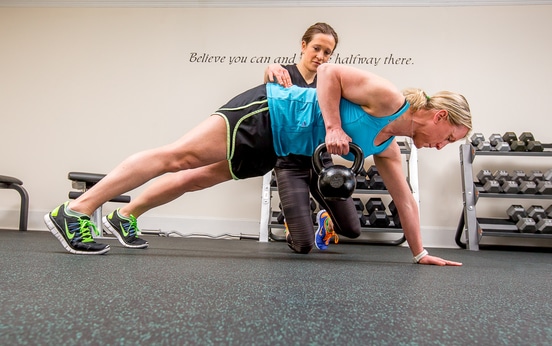
We train at Anytime Fitness Loudwater. Not a classroom. Not online. A real gym where you learn to coach real people in a real environment, so that when you qualify, you've already done the hard part.
Our classes are capped at 15 students. That's not a marketing line - it's a deliberate choice. It means our tutors (who are active industry professionals, not just lecturers) actually know you, your strengths, and where you need support.
Our qualification is Ofqual-regulated and CIMSPA-recognised, which means it meets the standards that employers, insurers, and gym chains look for.
And yes, we teach the business side. Because we want our graduates to build careers, not just collect certificates.
The Bottom Line
Choosing a PT course is one of the most important decisions you'll make in your fitness career. It deserves more than a quick Google and a price comparison.
Take your time. Ask the awkward questions. Talk to graduates, not just salespeople. Think about what "qualified" actually means to you - is it a piece of paper, or is it genuine readiness to do the job?
And if you want to have an honest conversation about whether Bucks PT Academy is the right fit for you - no pressure, no hard sell - we're happy to talk.
Book a call or drop us a message:
We'd rather you chose the right course for you - even if that's not us - than signed up anywhere unprepared.
Related Reading
Take the Next Step
Ready to explore personal training as a career? Download our free prospectus to learn about our Ofqual-regulated, CIMSPA-recognised Level 3 Diploma - including course structure, career outcomes, and how to get started.
👉 Request Your Free Prospectus
Already know this is for you? Book a 15-Minute Call or Message Us on WhatsApp to discuss your options.